AI Agent Implementation
Build intelligent, autonomous AI agents that work alongside your team. From single-purpose bots to complex multi-agent systems that handle real-world tasks.
Services
Agent Services
Custom AI Agents
Design and build autonomous AI agents tailored to your workflows - from customer support to data analysis to code generation with human-in-the-loop controls.
Multi-Agent Orchestration
Architect multi-agent systems with specialized roles, communication protocols, task delegation, and conflict resolution for complex business processes.
Conversational AI
Build intelligent chatbots and virtual assistants with context awareness, memory, tool use, and seamless handoff to human agents.
Agent Tool Integration
Connect agents to your tools and data - APIs, databases, CRMs, ERPs, and custom systems with proper authentication and rate limiting.
Agent Frameworks
Implementation using LangChain, CrewAI, AutoGen, and custom frameworks - with evaluation, testing, and monitoring for production readiness.
Process Automation Agents
Deploy agents for document processing, email management, scheduling, reporting, and other repetitive tasks to free up your team.
What We Do
What AI Agent Implementation Actually Requires
An AI agent is a system that perceives its environment, makes decisions, and takes actions to achieve a goal. In production deployments this means a language model with access to tools: APIs it can call, databases it can query, files it can read and write, code it can execute, and services it can interact with on behalf of a user or autonomously. The engineering challenge is not making the agent capable. It is making the agent capable of the right things, within the right boundaries, with the right level of human oversight, and with enough reliability and observability to operate in production without constant intervention.
Agent architecture decisions made early have significant downstream consequences. The tool set defines the agent's blast radius if it behaves unexpectedly or is manipulated through prompt injection. The memory architecture determines whether the agent retains context across sessions and how that context is stored, accessed, and protected. The orchestration model determines how tasks are broken down, assigned to specialized sub-agents, and recombined into coherent outputs for multi-agent systems. Human-in-the-loop design determines which decisions the agent makes autonomously and which require human confirmation before action is taken. These are engineering decisions that require deliberate design rather than defaults inherited from a framework tutorial.
Security is not a layer added after the agent is built. It is a design constraint applied from the beginning. Least-privilege tool access ensures that agents cannot take actions beyond what their function requires. Input and output filtering guards against prompt injection at the boundaries between agent components and external content. Audit logging captures the full decision and action trace so anomalous agent behavior can be investigated after the fact. We build agents with these controls in the architecture from the start rather than retrofitting them after the agent has already reached production.
Deliverables
What You'll Receive
Architecture and Security
AI Agent Design for Production, Security, and Regulated Environments
Multi-Agent System Design
Multi-agent systems distribute complex tasks across specialized agents that communicate, delegate, and coordinate. The architecture decisions that determine whether a multi-agent system works reliably in production cover task decomposition, agent role boundaries, inter-agent communication protocols, conflict resolution when agents produce contradictory outputs, and the orchestration layer that manages the overall workflow. We design multi-agent systems using frameworks including LangChain, CrewAI, and AutoGen, selected based on your specific use case rather than familiarity, with evaluation and testing coverage that validates the full agent graph rather than individual components in isolation.
Security-First Agent Architecture
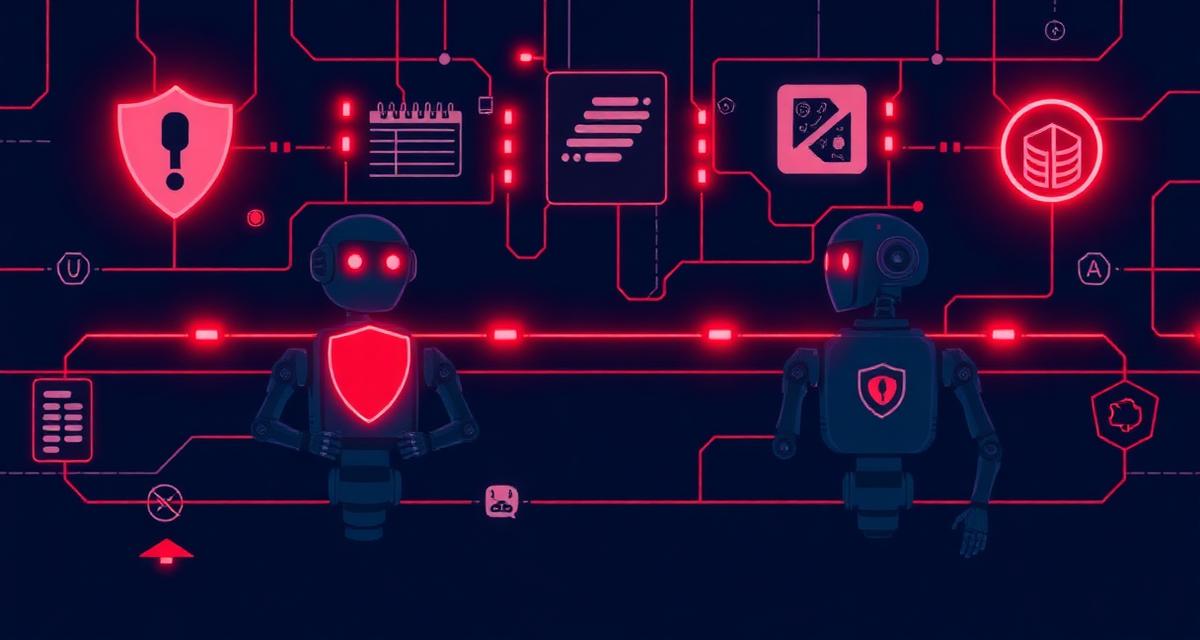
An agent's danger scales with what it's allowed to touch, not with how smart the underlying model is. We scope each agent's tool access to the narrowest set its job requires, so a manipulated agent can only do limited damage. Every tool call, decision, and output gets logged, which is what makes it possible to catch a compromised agent instead of just wondering later what happened. And we treat the boundary where outside content enters the agent's context as hostile by default, filtering it before it can smuggle in instructions the agent wasn't supposed to follow.
Agents in Regulated Environments
Organizations in healthcare, financial services, and government deploying AI agents face regulatory requirements that apply to the agent's actions, not just its training data. An agent that retrieves, summarizes, or acts on PHI inherits the HIPAA obligations that apply to that information regardless of whether a human or an AI system is handling it. An agent that executes financial transactions or accesses customer financial data operates within regulatory frameworks that require audit trails, access controls, and human oversight at defined decision thresholds. We design agent architectures for regulated environments with these obligations built into the access control model, logging architecture, and human-in-the-loop enforcement from the start.
FAQ
Common Questions About AI Agent Implementation
What is an AI agent and how does it differ from a chatbot or standard LLM application?
A chatbot or standard LLM application takes input, generates a response, and returns it to the user. The model has no persistent state and takes no actions beyond producing text. An AI agent extends this model by giving the language model access to tools it can invoke autonomously: APIs, databases, code execution environments, file systems, browsers, and external services. The agent can plan across multiple steps, invoke tools to gather information or take actions, observe the results, and continue reasoning toward a goal. This makes agents significantly more capable than standard LLM applications and significantly more complex to design, secure, and operate reliably in production.
What is human-in-the-loop and when should it be required in an AI agent system?
Human-in-the-loop is a design pattern that requires human confirmation before an agent takes a specified class of action. It is required when the consequences of an incorrect or manipulated agent action are significant enough that autonomous execution without oversight is not acceptable. The threshold varies by application: an agent summarizing documents can operate autonomously at low risk, while an agent sending communications, modifying financial records, deleting data, or executing code in a production environment warrants human confirmation for those specific action classes even if other actions can proceed autonomously. We design human-in-the-loop requirements based on the blast radius of each tool in the agent's toolkit rather than applying a uniform policy across the entire agent.
What frameworks are used to build AI agents and how do we choose between them?
LangChain provides a broad ecosystem of integrations and is well suited to agents that need to connect to a wide variety of tools and data sources. CrewAI is designed specifically for multi-agent systems with defined roles and is well suited to workflows where specialized agents collaborate on complex tasks. AutoGen supports conversational multi-agent patterns and is well suited to research and code generation workflows where agents interact iteratively. Custom frameworks are appropriate when the use case has specific requirements that existing frameworks do not accommodate without significant modification. Framework selection should follow use case requirements rather than ecosystem popularity. We evaluate the options against your specific workflow, tool requirements, and production constraints before recommending a direction.
How do you test and evaluate AI agents before production deployment?
Agent evaluation is more complex than standard software testing because agent behavior is non-deterministic and depends on the model, the tool responses it receives, and the specific sequence of inputs it encounters. We build evaluation frameworks that cover task success rate across a representative set of scenarios, tool invocation accuracy for each tool in the agent's toolkit, failure mode behavior when tools return errors or unexpected responses, and behavior under adversarial inputs including prompt injection attempts. We also run the agent through production-representative scenarios in a staging environment with real tool integrations rather than mocked responses before recommending deployment, because mocked tool responses frequently mask failure modes that only appear when the agent encounters real-world data and API behavior.
What monitoring is required for AI agents in production?
Production AI agents require monitoring at multiple layers. Model-level monitoring tracks input and output token consumption, latency, and error rates from the model provider. Tool-level monitoring tracks which tools are invoked, with what parameters, and what they return, which is essential for both debugging and security anomaly detection. Task-level monitoring tracks whether agents successfully complete their intended tasks and where in the decision and action chain failures occur. Security monitoring watches for anomalous tool invocation patterns that may indicate prompt injection or agent misuse. We design monitoring architectures that provide visibility across all of these layers and integrate with your existing observability infrastructure rather than requiring a separate monitoring stack for AI operations.

Book a Call
Automate With AI Agents
Book a consultation to explore how AI agents can transform your workflows and operations.
Schedule a consultation
Choose a convenient time for a free 30-minute consultation.