Cloud Security Assessment Services
Cloud Security Engineering
Design and implement secure cloud architectures across AWS, GCP, and Azure - from zero-trust networks to cryptographic engineering.
Services
Cloud Security Services
Zero-Trust Architecture
Design and implement zero-trust network architectures with micro-segmentation, identity-aware proxies, and least-privilege access across your cloud environment.
IAM & Identity Federation
Centralized identity management with SAML 2.0, OIDC, SCIM provisioning, and federated authentication across cloud and on-premises systems.
Encryption & Key Management
End-to-end encryption strategy including TLS, PKI, CMEK, BYOK, and integration with AWS KMS, Azure Key Vault, GCP KMS, and HashiCorp Vault.
Multi-Cloud Security
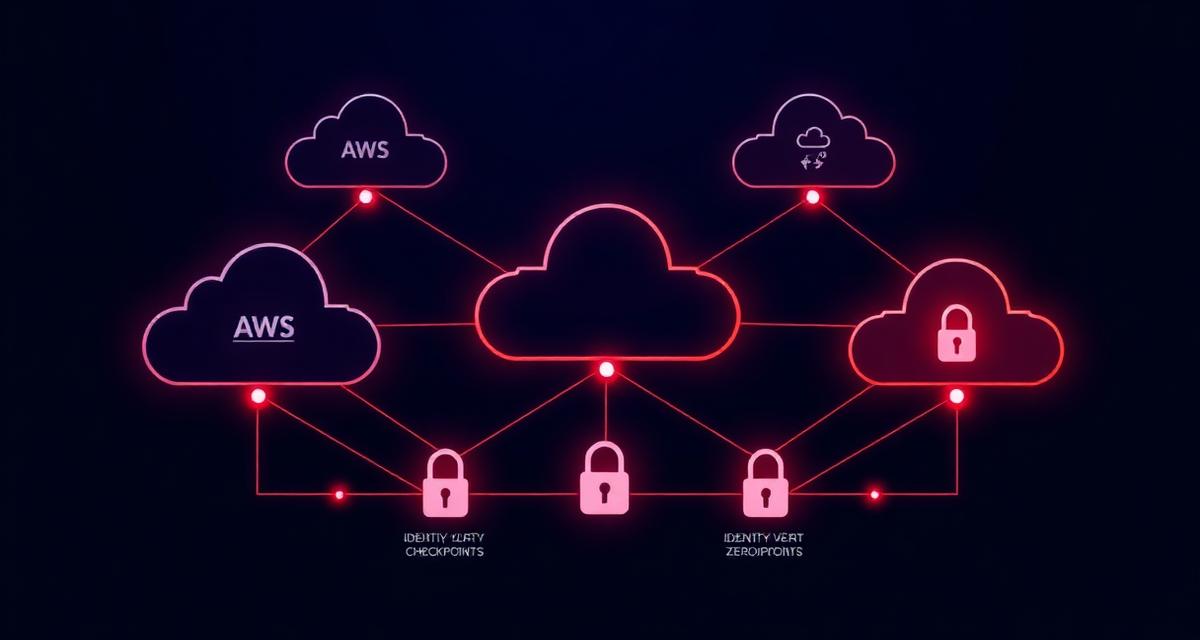
Unified security posture across AWS, GCP, and Azure. Multi-account structure, VPC segmentation, and cross-cloud security policies.
SIEM & Logging Architecture
Centralized logging, threat detection, and monitoring architecture. SIEM deployment, alert tuning, and incident response integration.
DevSecOps & CI/CD Security
Security integration into CI/CD pipelines with SAST, SCA, container scanning, IaC scanning, and automated security gates.
What We Do
What Cloud Security Engineering Actually Involves
Cloud security engineering is not a product you configure once and move on from. It is an ongoing discipline that covers the architecture decisions made when infrastructure is first built, the drift that accumulates as engineering teams move fast without security review, and the verification work required to confirm that the controls you believe are in place actually are. Most organizations discover their cloud security gaps during a compliance audit or after an incident rather than through proactive assessment.
Our cloud security work operates at the infrastructure level. We pull IAM policies and analyze them for privilege escalation paths and policy misconfigurations rather than reading from a framework checklist. We review VPC configurations, security group rules, and network ACLs against your actual traffic requirements rather than applying a template. We verify encryption at rest across every storage resource in scope, check KMS key rotation policies, and assess BYOK implementations for the specific providers your environment uses. The output is an accurate picture of your security posture, not a report produced from a questionnaire.
We also work directly in your infrastructure. Remediation for IAM gaps includes the specific policy changes required. Remediation for encryption gaps includes the resource configuration changes and, where relevant, the Terraform or CloudFormation modifications needed. DevSecOps integration covers the specific pipeline stages where SAST, SCA, container scanning, and IaC scanning should be inserted based on your existing CI/CD architecture. Your engineering team receives work it can execute rather than recommendations it needs to interpret.
Multi-Cloud
Cloud Provider Expertise
AWS
GCP
Azure
Common Problems
Cloud Security Problems We See in Production Environments
IAM Drift and Privilege Escalation
IAM configurations drift from their intended state as teams add permissions to unblock work and never remove them when the need passes. The result is production environments where developers carry administrator-equivalent permissions, service accounts have access far beyond what their function requires, and cross-account trust relationships exist that no one can account for. We analyze IAM policy state directly, identify privilege escalation paths using the same tooling adversaries use, and produce a least-privilege remediation plan your team can implement without disrupting operations.
Encryption Gaps in Cloud Storage
Organizations frequently have encryption policies that describe data protection requirements without verifying whether those requirements are enforced in the infrastructure. S3 buckets created before a policy change remain unencrypted. RDS instances use provider-managed keys when customer-managed keys are required. KMS key rotation is disabled. BYOK implementations are configured correctly in one region but not others. We verify encryption configuration across every storage resource in scope and produce a remediation list with the specific configuration changes required for each finding.
Security Debt in CI/CD Pipelines
Engineering teams that move quickly accumulate security debt in their CI/CD pipelines: no SAST integration, no dependency scanning for known vulnerabilities, no container image scanning before deployment, and no IaC scanning for misconfigurations in Terraform or CloudFormation before infrastructure changes are applied. Each of these represents a class of vulnerabilities reaching production that could be caught earlier and more cheaply in the pipeline. We assess your existing pipeline stages and integrate security tooling at the points where it has the most impact with the least friction for the engineering team.
Deliverables
What You'll Receive
FAQ
Common Questions About Cloud Security Engineering
What is cloud security engineering and how is it different from cloud security monitoring?
Cloud security engineering covers the design, implementation, and verification of security controls in your cloud infrastructure: IAM architecture, network segmentation, encryption configuration, key management, and DevSecOps pipeline integration. It is the discipline of building security into the environment. Cloud security monitoring is the ongoing detection and analysis of security signals from that environment after it is built. The two are complementary. Monitoring surfaces threats that the engineering controls were not designed to prevent. Engineering reduces the attack surface that monitoring needs to cover. Organizations that invest only in monitoring without addressing engineering-level gaps will find their detection program overwhelmed by a large and preventable attack surface.
How does zero-trust architecture work in a cloud environment?
Zero-trust in cloud environments means that no user, service, or network location is trusted by default. Every request for access is authenticated, authorized against a least-privilege policy, and logged. In AWS this is implemented through IAM policies that deny by default, VPC configurations with explicit allow rules rather than broad network trust, and identity-aware access controls for internal services. Micro-segmentation prevents lateral movement by ensuring that a compromised workload cannot reach resources it has no business accessing. We design zero-trust architectures around your specific workload topology rather than applying a generic model that creates operational friction without a corresponding security benefit.
What is BYOK and when does our organization need it?
Bring Your Own Key is a key management model in which your organization controls the encryption keys used to protect data in cloud services rather than relying on provider-managed keys. It is required in several compliance contexts: FedRAMP at higher impact levels, certain HIPAA implementations where customer key control is specified in BAAs, and financial services environments where key custody requirements are explicit. It also provides a meaningful security control because revoking your key immediately renders provider-stored data inaccessible regardless of whether the provider is compromised. We have implemented BYOK frameworks across AWS KMS, Azure Key Vault, GCP KMS, HashiCorp Vault, and KMIP-compliant providers in production environments.
How do you assess cloud security in a multi-cloud environment?
Multi-cloud assessment requires separate evaluation of each provider because IAM models, network constructs, encryption primitives, and logging architectures are all provider-specific even when the security requirement is the same. AWS IAM and GCP IAM share the same least-privilege principle but implement it through entirely different policy structures. We assess each environment using tools with direct production coverage: Scout Suite, Prowler, and CloudSploit for AWS and GCP posture, CloudMapper for network topology, and direct IAM policy analysis for each provider. The output is a unified gap analysis with findings mapped to the provider and resource where each issue exists, and remediation guidance written for the specific service and configuration involved.
How long does a cloud security architecture engagement take?
A cloud security architecture assessment and design engagement typically runs 6 to 12 weeks depending on the number of cloud accounts in scope, the complexity of your IAM architecture, and whether the engagement includes remediation implementation alongside assessment. Focused assessments covering a single cloud provider with a well-defined scope run toward the shorter end. Engagements covering multi-cloud environments, complex IAM federation, BYOK implementation, and DevSecOps pipeline integration run longer. We scope the engagement after an initial architecture review so the timeline reflects your actual environment rather than a standard estimate applied regardless of complexity.
Insights
Related Articles


Sub-services
Explore Cloud Security
Book a Call
Secure Your Cloud Infrastructure
Book a free consultation to discuss your cloud security architecture and get expert recommendations.
Schedule a consultation
Choose a convenient time for a free 30-minute consultation.